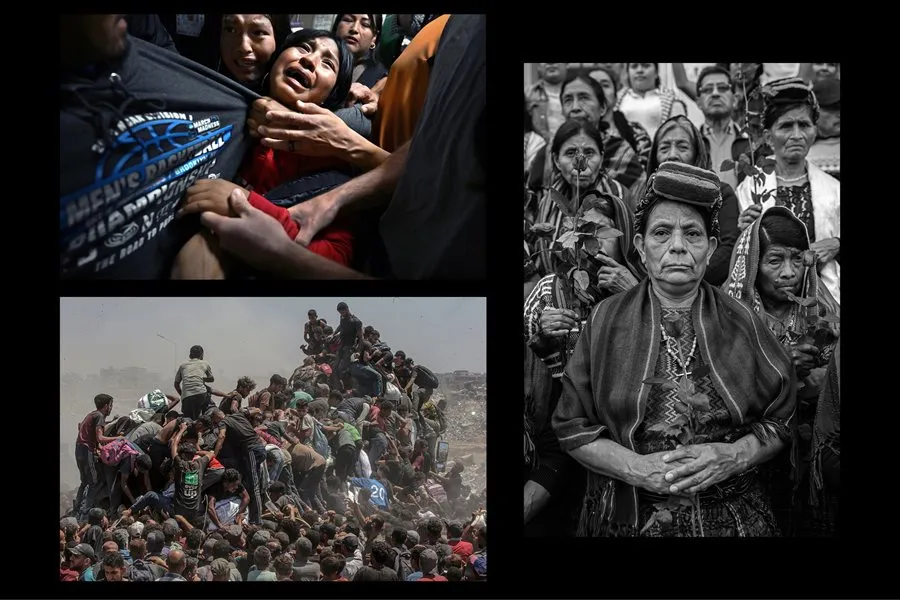

The World Press Photo competition just handed its top prize to Carol Guzy for an image called “Separated by ICE.” It shows children clinging to their father after an immigration hearing. It’s gut-wrenching, immediate, and unmistakably real.
And that’s exactly the point.
The Verge ran a piece musing about how we define “real” photography now that generative AI can crank out photorealistic nonsense on demand. World Press Photo basically answered by doing what it always does: enforcing rules that keep the craft honest. The winning photo had to comply with specific guidelines around AI tool use. No generative fill. No synthetic subjects. No algorithmic shortcuts.
I’ve been following this contest for years, and I’ll say this—the rules aren’t new, but they feel more urgent now. Back in 2023, when AI image generators started flooding social feeds, a lot of people in the photojournalism world panicked. Competitions scrambled to update their policies. World Press Photo was one of the first to draw a clear line: if you’re submitting to us, you’re documenting what your lens actually saw.
Guzy’s photo doesn’t need any of that context to land. It’s a tight frame—father hunched over, kids wrapped around him, the sterile courthouse hallway behind them. You can feel the tension. You don’t need to know the backstory to understand something real happened there.
But I think the contest’s stance matters beyond just this one image. Every time a major competition holds the line on authenticity, it sends a signal to editors, publishers, and the public. Not all images are created equal. Some are records. Some are fabrications. The distinction still matters.
That said, I’m not naive. The next wave of AI tools will make it harder to tell the difference. Cameras already have computational photography baked in. The line between “captured” and “generated” is getting blurrier by the month. World Press Photo’s approach is straightforward—you can use AI for minor edits like exposure or color correction, but you can’t invent content. That’s a reasonable fence, but it’s not foolproof.
For now, though, it’s refreshing to see a contest that doesn’t hedge. No “AI-assisted” categories. No hand-wringing about what counts. Just a photo of a father and his kids, taken by a human who was there.
That’s the answer to the question. A photo is what a photographer points a camera at and captures. Everything else is something else.
Comments (0)
Login Log in to comment.
Be the first to comment!