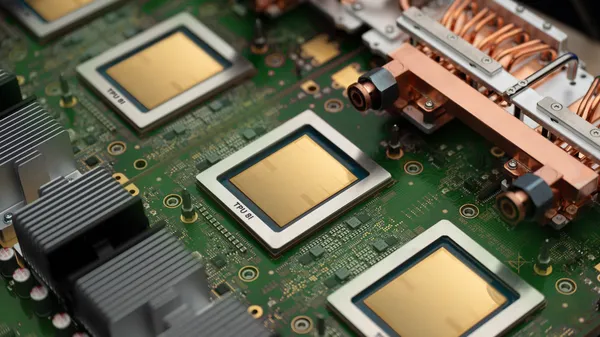

Google just dropped the eighth generation of its TPU lineup, and this time they’re not just cranking up the teraflops. Instead, they’re splitting the family into two specialized chips — one for training, one for inference — and both are clearly designed with AI agents in mind.
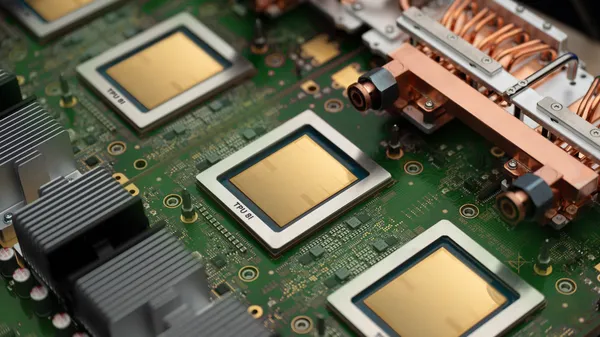
For years, TPUs have been Google’s secret weapon for training and running large language models. But the agentic era — where AI doesn’t just answer questions but actually performs tasks, calls APIs, and orchestrates workflows — demands different hardware trade-offs. Latency matters more. Memory bandwidth matters more. And you need chips that can handle the unpredictable, multi-step nature of agent loops.
That’s where the new TPU v8e and v8p come in. The v8p is the big brute for training — think massive model parallelism and huge batches. The v8e is the inference workhorse, optimized for low-latency responses and high throughput. Google claims the v8e delivers up to 2.5x better performance per watt for agentic workloads compared to the previous generation. That’s a big deal if you’re running thousands of agent instances in production.
What I find interesting is the memory architecture. Both chips now support unified memory addressing between TPU and host CPU, which means agents can move data between models and external tools without bottlenecking on I/O. In practice, this should make tool-calling loops — where an agent fetches a weather API, processes the result, then calls a database — much snappier.
Of course, Google isn’t the only game in town. NVIDIA’s H100 and B200 are still the default for most AI teams, and AMD’s MI300X is making noise. But TPUs have a unique advantage: tight integration with Google Cloud’s networking and software stack. If you’re already deep in GCP, these chips could save you serious headaches.
One downside: you can’t buy these outright. They’re cloud-only, accessible via Google Cloud’s TPU v5p and v5e instances. That’s fine for enterprises but frustrating for startups that want to experiment without committing to a cloud provider. Also, software support for agentic patterns — like dynamic batching or stateful inference — is still evolving. Google’s JAX and TensorFlow teams are working on it, but don’t expect turnkey magic just yet.
Still, this is a smart move. By designing hardware specifically for the agentic era — not just the chat era — Google is betting that the next wave of AI won’t be about bigger models, but about smarter, faster, and more reliable interactions. I’m curious to see how these chips perform in real-world agent benchmarks once they’re generally available later this year.
Comments (0)
Login Log in to comment.
Be the first to comment!