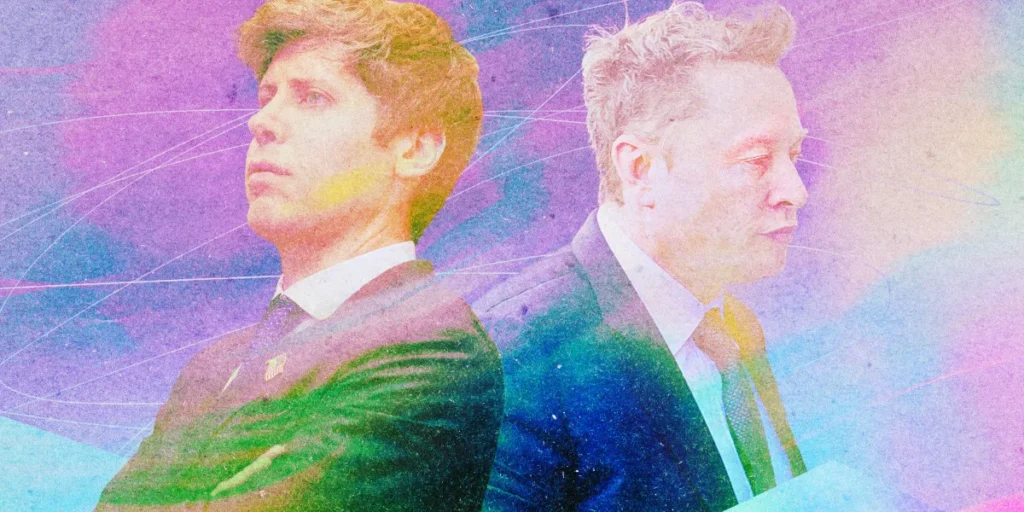

Elon Musk and Sam Altman are finally going to trial this week in Northern California, and it’s going to be a spectacle. After years of legal back-and-forth, a jury will decide whether OpenAI can exist as a for-profit company ahead of its highly anticipated IPO. The stakes are enormous: the court could essentially kill the IPO, remove Altman and president Greg Brockman from their roles, or force the company back to its nonprofit roots.
Musk is suing OpenAI for a cool $134 billion in damages, plus he wants Altman and Brockman kicked out. He claims they duped him into bankrolling the company back in 2015 by promising it would stay a nonprofit dedicated to open-source AI for humanity’s benefit. Then, as the story goes, they quietly pivoted to a for-profit structure once they had his money and credibility. Musk co-founded OpenAI with Altman and others, but left in 2018 after a bitter power struggle. He’s asking the court to award any damages to OpenAI’s nonprofit, not to himself personally — a move that feels more about principle than pocket change.
Nine jurors will deliver an advisory verdict, which is non-binding but will guide the judge’s decision. Musk, Altman, and Brockman will all take the stand. Also expected to testify: former OpenAI chief scientist Ilya Sutskever, former CTO Mira Murati, and Microsoft CEO Satya Nadella. Expect cringey texts, raw diary entries, and endless scheming to come to light. In an industry that thrives on secrecy, this trial is a rare chance to peek behind the curtain at how the most transformative technology of our time is actually being built.
What’s the actual fight about?
When OpenAI launched as a nonprofit, backed by a $38 million donation from Musk, it promised to create open-source technology for the public good — no need to generate financial returns. But over time, the company started arguing that competitive pressures made it dangerous to share how it develops AI models, and that a nonprofit structure couldn’t raise enough money to keep building. MIT Technology Review was first to report on those internal conflicts.
The court has already found that in 2017, Altman and Brockman wanted to establish a for-profit arm, while Musk proposed merging OpenAI with Tesla. When Musk threatened to stop funding, Altman and Brockman told him they were committed to keeping it a nonprofit. Musk alleges they then pursued the for-profit pivot behind his back. OpenAI counters that Musk agreed the company needed a for-profit entity and even wanted to be its CEO.
But here’s the thing: even if Musk proves he was misled, legal scholars are puzzled over whether he has standing to sue. “The idea that Elon Musk can sue because he was a donor or used to be on the board is pretty puzzling,” says Jill Horwitz, a law professor at Northwestern University. “Typically, it’s up to the attorneys general to bring such a claim.” And that’s already happened.
In October 2025, state attorneys general of California and Delaware struck a deal with OpenAI to approve its new corporate structure, with conditions like a safety committee at the nonprofit reviewing for-profit decisions. Critics including Musk, AI safety advocates, and civil society groups have tried to stop it. California’s attorney general declined to join Musk’s lawsuit, saying it didn’t serve the public interest.
Still, whether that deal truly holds OpenAI to its nonprofit mission is an open question. Rose Chan Loui, director of the UCLA School of Law’s nonprofit program, says Musk needs to show what’s deficient in the agreement OpenAI already made with the attorneys general.
The real drama: what comes out in court
This trial isn’t just about legal technicalities. It’s a window into the messy, ego-driven world of AI development. Expect testimony about power struggles, broken promises, and the tension between idealism and capitalism. The public will finally see the raw emails and diary entries that shaped OpenAI’s evolution from a lofty research lab to a $100 billion-plus juggernaut.
The outcome could set a precedent for how AI companies balance mission and profit. If the court forces OpenAI back to nonprofit status, it would send shockwaves through the industry. If it lets the for-profit structure stand, it effectively greenlights similar pivots by other startups. Either way, this trial is going to be messy, revealing, and absolutely essential reading for anyone who cares about where AI is headed.
Comments (0)
Login Log in to comment.
Be the first to comment!