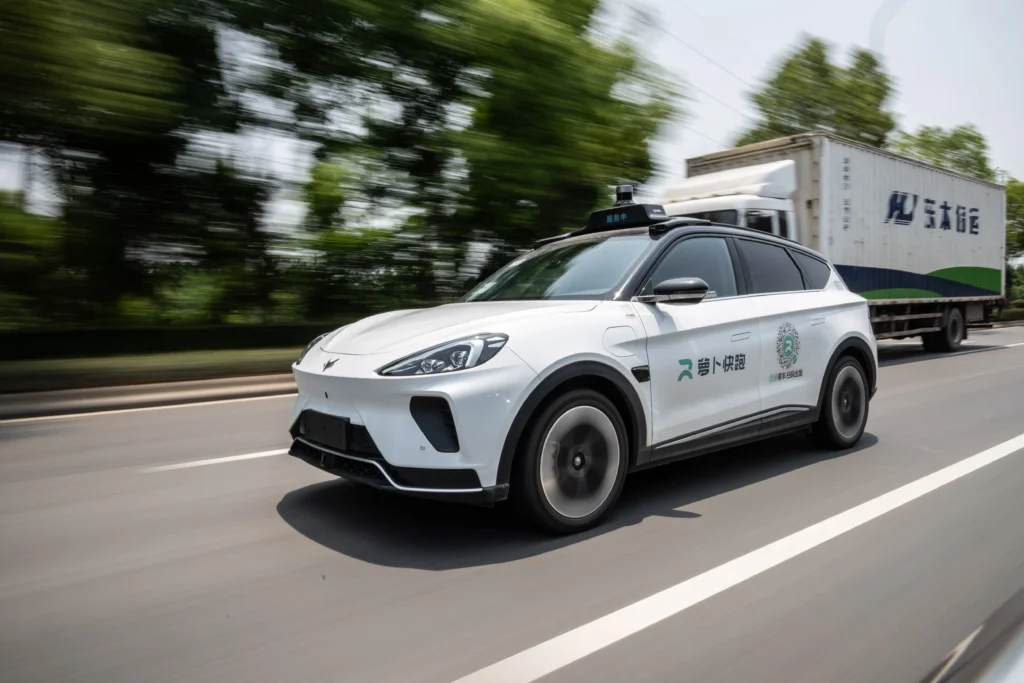

China has hit pause on new autonomous vehicle licenses. Bloomberg reports, citing unnamed sources, that regulators are freezing approvals after a Baidu robotaxi fleet caused a massive traffic jam in Wuhan last month.
The incident wasn’t subtle. Dozens of Baidu’s Apollo Go robotaxis just stopped moving in traffic, creating chaos that apparently spooked Beijing enough to trigger a sector-wide review. The freeze means no new driverless cars can join existing fleets, no expansion into new cities, and no new test projects for the time being. No one knows when the freeze will lift.
This is higher than I expected. China has been pushing hard on autonomous driving, and Baidu’s Wuhan operation was seen as a flagship program. The city had become a testing ground for large-scale robotaxi deployment, with hundreds of vehicles roaming the streets. One traffic jam shouldn’t derail an entire industry, but it clearly did.
The Bloomberg report says authorities in Beijing were alarmed enough to urge local governments to review the sector. That’s a strong signal. Chinese regulators don’t usually move this fast unless they see systemic risk or public safety concerns. The fact that they’re freezing licenses across the board suggests they think the problem isn’t limited to Baidu.
I’ve seen this pattern before. A high-profile incident triggers a regulatory pause, companies scramble to prove safety, and eventually the freeze lifts with stricter rules. The question is how long this one lasts. Weeks? Months? If regulators demand hardware changes or new safety protocols, it could take longer.
Baidu’s Apollo Go has been expanding aggressively. They operate in multiple Chinese cities and were planning to scale up significantly this year. This freeze hits their growth plans hard. Other Chinese autonomous driving companies like Pony.ai and WeRide are also affected since the freeze applies to all new licenses, not just Baidu’s.
The irony is that Wuhan was supposed to be a success story. Baidu had been operating there for years with relatively few incidents. One bad day in traffic and the entire regulatory framework gets re-evaluated. That’s how fragile the robotaxi industry still is.
For now, the message is clear: China wants autonomous vehicles, but not at the cost of public patience. One traffic jam shouldn’t be a crisis, but it was. And the freeze is the result.
Comments (0)
Login Log in to comment.
Be the first to comment!