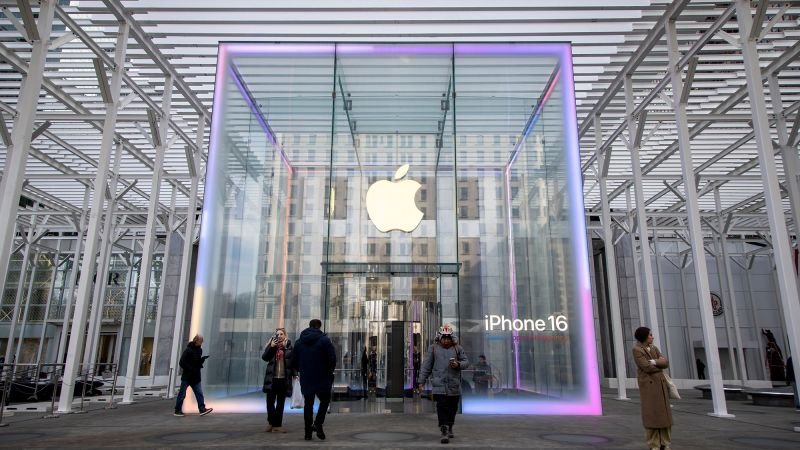

Apple has been taking a beating in the press lately over its AI rollout, and honestly? Some of it is deserved. The company that built its reputation on polished, intuitive products has been shipping stuff like text message summaries that are comically useless. Siri’s big AI upgrade got delayed indefinitely. The whole thing feels uncharacteristically sloppy.
But here’s what’s bugging me about this narrative: everyone is acting like Apple is uniquely failing at AI, when the truth is that AI is just not ready for prime time. And the people who’ve been hyping it for years are now blaming users for not being smart enough to appreciate it.
The Wall Street Tail Wagging the Dog
Let’s be real about why Apple is even doing this. It’s not because customers are clamoring for AI features. Last year, Apple had to pull an ad for its AI because the backlash was so intense. Nobody asked for AI-powered Siri. Nobody is demanding AI summaries of their text messages.
The push is coming from investors who want an Apple “super cycle”—a new feature so compelling that everyone rushes to upgrade their phones. Wall Street is desperate for a reason to keep the stock climbing, and AI is the magic word that gets them excited. So Apple, like every other tech giant, is scrambling to inject AI into products whether it makes sense or not.
And the result is predictable: half-baked features that don’t work well and don’t solve real problems.
The “AI Can Never Fail” Fallacy
There’s a concept in politics: “The party can never fail, it can only be failed.” It’s the idea that ideological true believers blame voters for not appreciating their platform, rather than admitting the platform itself has problems.
AI’s biggest backers have adopted the exact same mindset. When Apple’s AI features flop, the narrative isn’t that AI might not be ready for consumer products. It’s that Apple failed AI. That users are too dumb to understand how to talk to chatbots. That we’re all just Luddites who don’t get it.
New York Times columnist Kevin Roose made this argument on his podcast recently, saying Apple needs to “be more comfortable with error, with mistakes, with things that are a little rough around the edges.” He argued that users should learn the right way to query AI systems, accepting their limitations instead of expecting them to work perfectly out of the box.
To which I say: absolutely not.
Why Apple’s Caution Is Actually Smart
Apple has built a $3 trillion empire on one simple principle: things should just work. You buy an iPhone, turn it on, and it works. Your parents can figure out FaceTime without a manual. You trust the device with your face scan, your bank account, your real-time location—because Apple has earned that trust through obsessive attention to detail and privacy.
Now imagine that same company shipping a product that’s 80% accurate, that occasionally makes up facts, that requires users to learn special prompting techniques to get halfway decent results. That’s not an Apple product. That’s the opposite of an Apple product.
And honestly? That’s fine. Not every technology needs to be shoved into consumer products the moment it exists. Large language models are fascinating science. They have real potential. But they are not ready to be the core feature of a mass-market device that billions of people rely on for daily life.
Nobody Has Figured This Out
Here’s the part that gets lost in all the Apple-bashing: nobody else has cracked this either. As Casey Newton pointed out on the same podcast, Google hasn’t figured out a killer AI use case that makes people rush to buy Pixel phones. Amazon’s Alexa has been a glorified timer and music player for years. Microsoft’s Copilot is… fine, I guess?
ChatGPT and Claude are genuinely impressive tools. I use them. But they are not consumer products in the way an iPhone is a consumer product. They are research tools, productivity aids, conversation partners for people who understand their limitations. They are not something you hand to your grandmother and expect her to use without frustration.
The idea that Apple should just ship imperfect AI features and let users deal with the mess is not a strategy. It’s a surrender to hype.
The Real Letdown
Apple’s AI rollout has been messy. The delays, the useless summaries, the awkward positioning—it’s not a great look for a company that prides itself on polish. But the real story here isn’t that Apple failed AI. It’s that AI, in its current form, isn’t ready to be the revolutionary consumer technology that investors and pundits keep promising.
The technology is impressive. It’s also unreliable, unpredictable, and often just plain wrong. Pushing it into products before it’s ready doesn’t solve that problem. It just creates bad experiences that erode trust.
Apple’s mistake was rushing to please Wall Street instead of waiting until the technology was actually ready. That’s a mistake a lot of companies are making right now. But calling it a failure of Apple, rather than a failure of the technology itself, is exactly backwards.
Comments (0)
Login Log in to comment.
Be the first to comment!