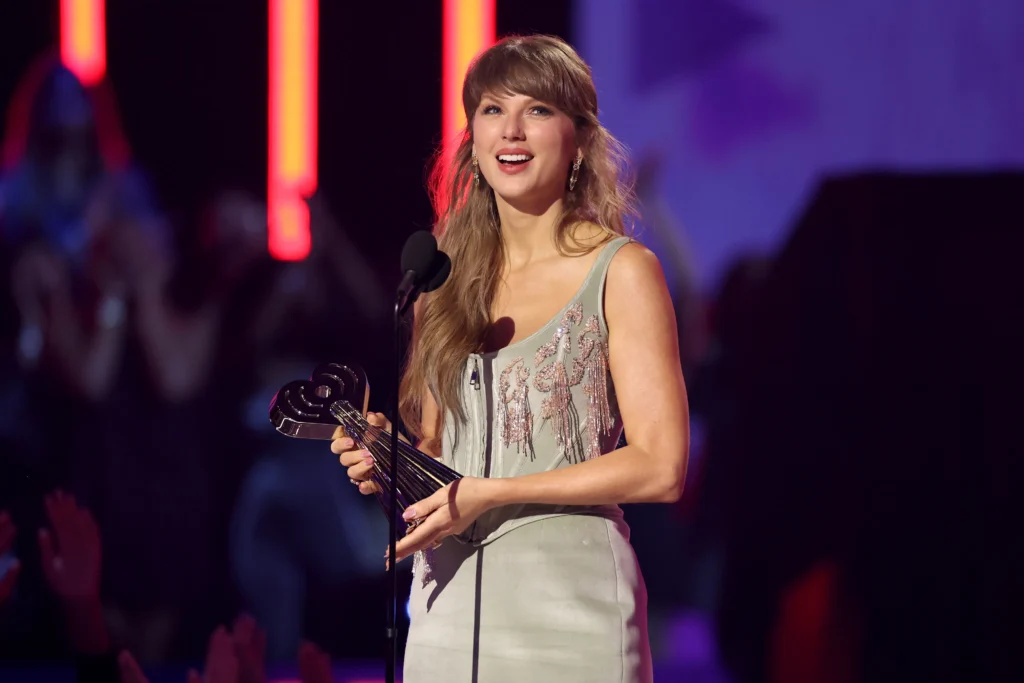

Taylor Swift has been dealing with AI copycats for years now. Remember those deepfake songs that sounded eerily like her? The ones that fooled fans and racked up millions of streams before being pulled down? She’s not just sitting back anymore.
Last week, her management company TAS Rights Management filed trademark applications for two phrases she’s known for saying: “Hey, it’s Taylor Swift” and “Hey, it’s Taylor.” The filings include audio clips of Swift speaking these lines as part of a promotion for her most recent album. The idea seems straightforward: if you own the trademark on those words spoken in her voice, then anyone using an AI clone to say them is infringing.
But here’s where it gets messy. Trademarks protect brand identifiers, not your literal vocal cords. You can trademark a phrase used in commerce, like Nike’s “Just Do It.” But can you trademark the specific sound of your voice saying those words? The law hasn’t caught up with generative AI yet, and this is a novel approach that might not hold water.
Let me be clear: I think it’s smart that Swift’s team is trying something. The music industry has been asleep at the wheel when it comes to AI voice clones. We’ve seen artists like Drake and The Weeknd get their voices faked, and the response has been reactive, not proactive. Swift is trying to build a fence before the horse gets out.
The problem is that trademark law is designed to prevent consumer confusion in the marketplace. If someone uses “Hey, it’s Taylor Swift” to sell a product or promote a service, and it’s clearly not her, that’s deception. But what about a fan-made parody? Or a commentary video? Fair use gets complicated fast.
Also, trademark registrations require you to show the mark is being used in commerce. Swift has used these phrases in album promotions, so that part checks out. But the scope of protection is narrow. It covers the specific phrase in relation to specific goods or services—like music downloads, concert tickets, or merchandise. It doesn’t give her blanket ownership over anyone saying those words in conversation, even with an AI voice.
I’ve seen this approach tried before. Some actors have tried to trademark their likeness or catchphrases, and it’s always a mixed bag. The US Patent and Trademark Office tends to reject marks that are too descriptive or generic. “Hey, it’s Taylor” is pretty close to just announcing yourself on the phone.
What Swift really needs is federal legislation that treats your voice like your face—a form of identity that can’t be commercially exploited without consent. A few states have passed laws against deepfake pornography and political impersonation, but there’s no comprehensive federal right of publicity that covers AI voice clones. That’s where the real fight should be.
For now, this trademark gambit buys time. It sends a message to AI developers and platforms that Swift will sue if they cross the line. And it puts other celebrities on notice: start thinking about how to protect your identity in the age of generative AI, because the law isn’t going to save you.
But honestly? I don’t think trademarking a phrase will stop the problem. The genie is out of the bottle. AI voice cloning tools are cheap and widely available. The real solution is platform responsibility—services like Spotify, YouTube, and TikTok need better detection and takedown processes for unauthorized AI-generated content. That, and a federal law that makes it clear: your voice is yours, not a free resource for anyone with a GPU.
Swift’s team knows this is a long shot. But sometimes you have to try the long shot to force the conversation.
Comments (0)
Login Log in to comment.
Be the first to comment!