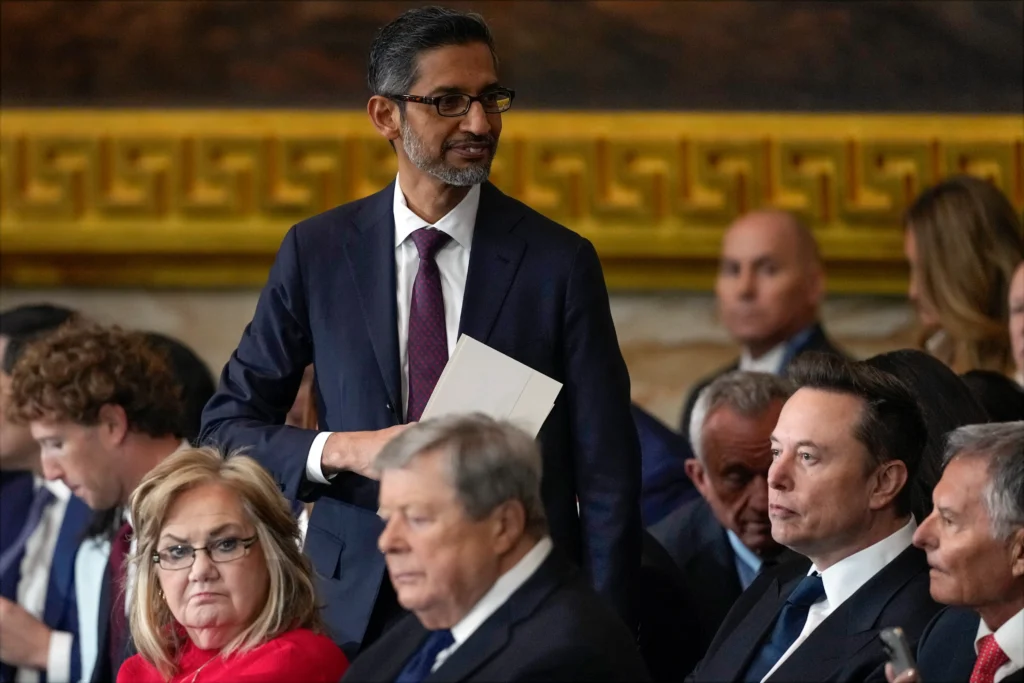

Over 600 Google employees have signed a letter to CEO Sundar Pichai demanding the company stop working with the Pentagon on classified AI projects. The Washington Post first reported the letter, noting that many of the signers come from Google’s DeepMind AI lab, including more than 20 principals, directors, and vice presidents.
The letter makes a pretty stark argument: “The only way to guarantee that Google does not become associated with such harms is to reject any classified workloads. Otherwise, such uses may occur without our knowledge or the power to stop them.”
This isn’t a small group of disgruntled entry-level folks. When you’ve got VPs and directors signing on, it signals real internal unease. And it’s not the first time Google has faced this kind of revolt — remember the Project Maven controversy back in 2018? That led to Google pulling out of a contract with the Pentagon and issuing its AI Principles, which explicitly said the company would not build weapons or systems that cause harm.
But here’s the thing: those principles have always been a bit fuzzy around the edges. Classified work, by definition, means the public — and apparently even employees — can’t see what’s actually being built. The letter seems to be saying that if you can’t audit it, you can’t trust it.
Interestingly, Anthropic is currently in its own legal battle with the Pentagon over similar issues. That company was founded by ex-OpenAI folks who wanted to build safe AI, and now they’re fighting the government over what their models can be used for. The parallels are hard to ignore.
Sundar Pichai hasn’t responded publicly yet, but this puts him in a tough spot. Google has been aggressively chasing government contracts, especially in cloud and AI. Saying no to the Pentagon means leaving money on the table. Saying yes means risking another internal rebellion and potential PR disaster.
What I find most interesting is that this keeps happening. Tech workers, especially in AI, seem to have a much lower tolerance for military applications than their executives do. Maybe it’s because the engineers actually understand the capabilities and risks better than the suits in the corner office. Or maybe it’s because they’re the ones who would have to look at themselves in the mirror after building something that could be used to identify targets.
Either way, this letter is a reminder that the AI ethics debate isn’t going away. Companies can write all the principles they want, but if their employees don’t trust them to follow through, those principles aren’t worth the PDF they’re printed on.
Comments (0)
Login Log in to comment.
Be the first to comment!