
I’ve watched a lot of tech-celebrity conversations over the years, and most of them are painfully staged. The host asks softballs, the guest recites talking points, and everyone walks away pretending something profound happened.
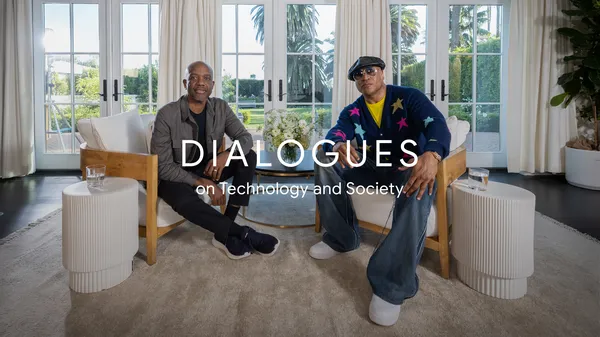
So when I saw that Google’s James Manyika sat down with LL COOL J for the latest episode of the Dialogues on Technology and Society series, I braced myself for more of the same.
But this one actually worked.
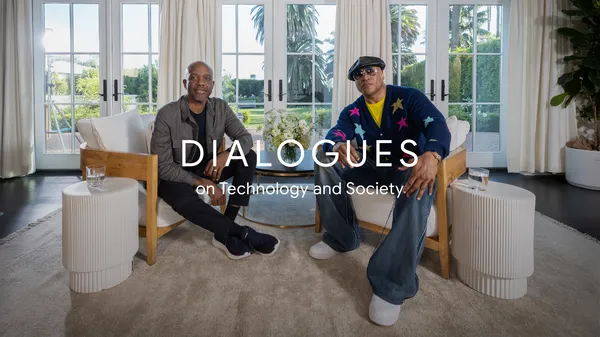
LL COOL J has been in the game since the 80s. He’s seen technology reshape music from analog tape to streaming, from drum machines to AI-generated beats. He’s not some celebrity who got dragged into a studio to read cue cards. He’s a guy who actually makes things—albums, lyrics, performances.
And James Manyika? He’s Google’s SVP of Research, Technology & Society. But he’s also someone who thinks about the human side of this stuff, not just the engineering metrics. That combination makes for a conversation that’s actually worth your time.
What they actually talked about
The core tension they explored is one I think about constantly: can AI be truly creative, or is it just remixing what humans already made?
LL COOL J didn’t sugarcoat it. He pointed out that when he writes a verse, he’s drawing from lived experience—the block he grew up on, the people he lost, the joy and pain he’s actually felt. An AI model can mimic that structure, but it hasn’t been to Queens in the 80s. It doesn’t know what that feels like.
Manyika pushed back a little, which I appreciated. He argued that creativity isn’t just about raw experience. It’s also about pattern recognition, recombination, and constraint-based problem solving—things AI is genuinely getting better at. He gave examples of AI-generated music that surprised even the musicians who trained the models.
But here’s where it got real: LL COOL J asked a question that stopped the conversation cold. “Can an AI look at a crowd and know when to change the energy?”
That’s the thing. Performance isn’t just creation. It’s reading a room. It’s feeding off the energy of a live audience. It’s knowing when to pause, when to shout, when to drop the beat. That’s something no model can do yet, and honestly, I’m not sure it ever will.
The parts that mattered
A few moments stood out to me:
- Manyika talked about how AI tools are already being used by musicians to break through creative blocks. Not to generate finished songs, but to generate starting points. I’ve heard this from actual producers too—they use AI to get unstuck, then rewrite everything anyway.
- LL COOL J made a point about authenticity that I think applies across all creative fields: “People can tell when you’re faking it.” AI-generated content is getting better, but there’s still a weird uncanny valley thing happening. Something feels off, even if you can’t put your finger on it.
- They both agreed that the biggest risk isn’t AI replacing artists. It’s that the industry will use AI to flood the market with cheap content, making it harder for real artists to get paid. That’s a real concern, and it’s already happening.
What I wish they’d gone deeper on
Look, this was a good conversation. But I wanted them to push harder on copyright and ownership. LL COOL J has been through the sampling wars of the 90s, where entire albums got pulled because of uncleared samples. AI training data is basically the same problem on steroids. Who owns what when a model trained on millions of songs generates something new?
Manyika danced around it a bit, which is typical for someone in his position. He talked about “responsible development” and “stakeholder input” without committing to a position. I get it—he’s not going to announce Google’s legal strategy in a fireside chat. But I wish he’d at least acknowledged that the current system is broken and needs fixing, not just tweaking.
The bottom line
This isn’t one of those conversations where a tech executive tells you everything is amazing and we should all embrace the future without question. And it’s not one where an artist tells you technology is destroying art. It’s two smart people who actually respect each other’s domains, trying to figure out where the line is.
That’s rare. And it’s worth watching.
Comments (0)
Login Log in to comment.
Be the first to comment!