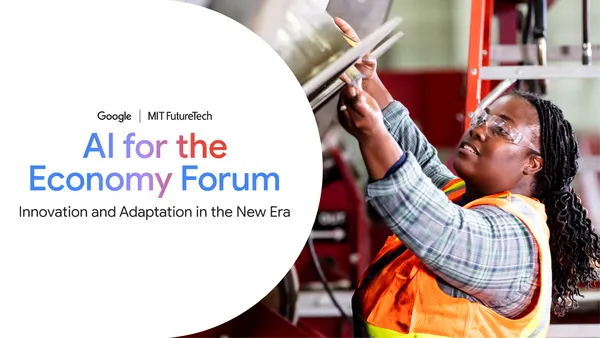

Google and MIT FutureTech just wrapped up the first AI for the Economy Forum in Washington D.C. The premise is refreshingly honest: nobody knows exactly how this shakes out. Neither the benefits nor the risks are guaranteed. That’s not a line from a cautious press release — it’s the actual starting point for a conversation that’s long overdue.
James Manyika, Google’s SVP of Research, Labs, Technology & Society, made it clear that how AI reshapes jobs and the economy is something we can influence. But that requires companies, governments, researchers, and workers to actually talk to each other. Forums like this are a decent start, but I’ve seen too many of these events produce nothing but slide decks and handshakes.
New Research Dollars
Google is putting real money behind understanding the economic shifts. The AI & Economy Research Program is funding external researchers through a Visiting Fellows program — MIT’s David Autor is already on board. The Digital Futures Project supported work from MIT’s Ben Armstrong and Julia Shah, who found that the most successful AI deployments minimize drudgery, promote learning, and foster collaboration. That sounds obvious, but most companies still deploy AI to cut costs first and ask questions later.
Google.org is also handing out grants and Google Cloud credits to a new cohort studying labor markets, sector-specific transformations in manufacturing and healthcare, and the policy environments needed to maximize workforce opportunity. They’re also expanding internal research on generative AI’s real-world impact on knowledge-worker productivity and the economics of AI agents. The academic advisory board includes Nobel Laureate Michael Spence, Cambridge’s Dame Diane Coyle, and former PIMCO CEO Mohamed El-Erian. That’s a heavyweight lineup.
Training Beyond Buzzwords
The training side is where this gets interesting. Google is funding programs for healthcare workers and creating apprenticeships in high-demand fields. They’re not just throwing up a few Coursera courses and calling it a day. The focus on healthcare is smart — that sector is desperate for AI-native workers, and the training pipeline is almost nonexistent.
But let’s be real: training programs are only as good as the jobs they lead to. If the economy shifts faster than the training curriculum, people get left behind. Google’s commitment is real, but the scale of the problem is enormous. We’re talking about millions of workers whose roles could be fundamentally altered in the next five years.
What’s Missing
The forum didn’t dodge the hard questions, but I wish they’d spent more time on what happens when AI replaces tasks faster than workers can reskill. The research agenda covers productivity and transformation, but the timeline for policy adaptation is glacial compared to AI development. The advisors are top-tier, but academic research moves at a different speed than the tech industry.
Still, I’ll give Google credit for putting skin in the game. Too many tech companies treat economic impact like a PR problem. This feels more like an actual attempt to understand the landscape before the landscape changes beneath everyone’s feet.
The real test will be whether the research actually informs policy and whether the training programs scale fast enough to matter. For now, it’s a solid first step. But the second step needs to be bigger.
Comments (0)
Login Log in to comment.
Be the first to comment!